
Biofuels ed e-fuels sono oggi al centro del dibattito europeo sulla decarbonizzazione del trasporto automobilistico. Uno degli aspetti che li rende particolarmente interessanti è la possibilità di utilizzarli nelle automobili con motore endotermico tradizionali, senza dover necessariamente sostituire l’attuale parco circolante. Ma se guardiamo all’intero ciclo di vita, quanto sono davvero vantaggiosi dal punto di vista ambientale?
Nel nostro articolo, appena pubblicato sulla rivista Sustainable Energy Technologies and Assessments, abbiamo messo a confronto le prestazioni ambientali del diesel fossile con quelle di due possibili alternative per le automobili convenzionali: e-diesel e HVO. L’analisi è stata condotta utilizzando la metodologia Life Cycle Assessment (LCA), considerando due prospettive diverse. La prima, well-to-wheel, considera tutto ciò che riguarda il carburante, dalla produzione fino all’utilizzo nell’automobile. La seconda, cradle-to-grave (CtG), amplia lo sguardo all’intero sistema, includendo anche l’autovettura e l’infrastruttura stradale. A completare l’analisi sono i dati sulle emissioni allo scarico, ottenuti attraverso una campagna sperimentale condotta sia in laboratorio sia su strada, in collaborazione con Innovhub – Stazioni Sperimentali per l’Industria.
I risultati mostrano che e-diesel e HVO riducono gli impatti sul cambiamento climatico rispetto al diesel fossile, con riduzioni comprese tra il 13% e il 57%. Tuttavia, il quadro è più complesso se si considerano anche le altre categorie d’impatto, dato che i miglioramenti riguardano solo 4 categorie su 15, evidenziando il rischio di spostare gli impatti ambientali da una categoria all’altra. Quando si aggregano gli impatti delle 16 categorie analizzate in un unico indicatore, invece, entrambi i carburanti alternativi presentano un impatto complessivo inferiore rispetto al diesel fossile.
L’analisi CtG aggiunge un ulteriore elemento di riflessione: oltre al carburante, anche l’automobile e l’infrastruttura stradale contribuiscono in modo rilevante agli impatti complessivi. Questo suggerisce che la riduzione dell’impatto ambientale del settore automobilistico richiede una visione più ampia, che non si limiti alla sola sostituzione del carburante.
L’articolo è disponibile in accesso aperto a questo link.
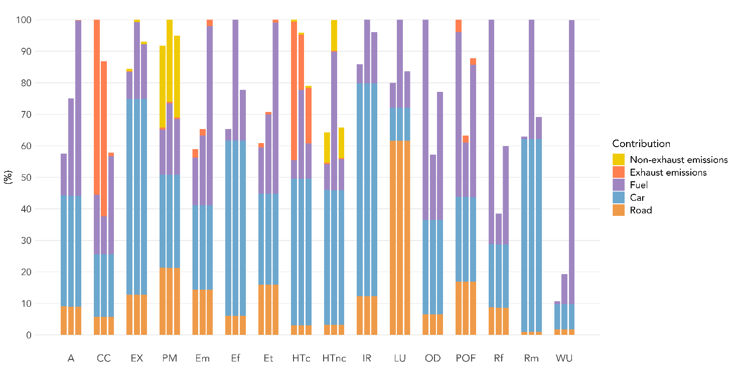
Impatti ambientali dei tre carburanti valutati a livello cradle-to-grave. Per ogni categoria d’impatto le barre sono ordinate da sinistra a destra come segue: diesel, e-diesel e HVO.